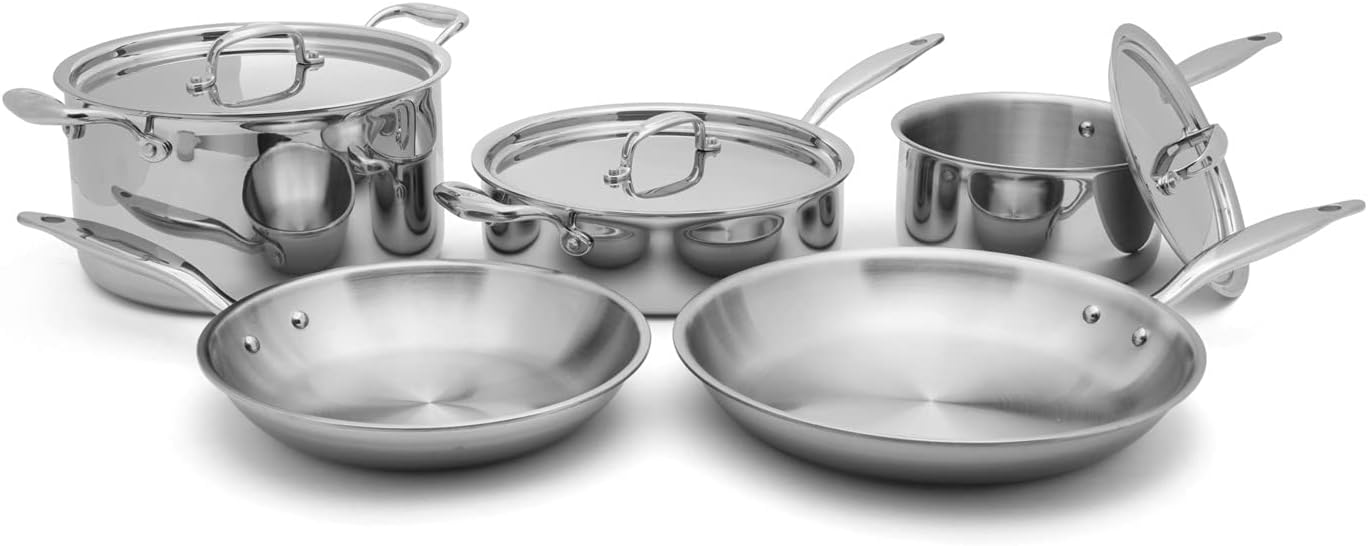
Cookware shapes how we cook and how food turns out. I rely on pans, pots, and baking dishes every day to brown, simmer, roast, and sautée, and choosing the right cookware can change a recipe’s result as much as technique does. Different materials—stainless steel, nonstick, cast iron, and clad aluminum—affect heat distribution, sticking, and how much maintenance a piece needs.
When picking cookware, pay attention to material, oven safety, and how it conducts heat; these factors determine cooking performance and long-term value. A well-made pan or pot that suits your stove and cooking style will heat evenly, release food predictably, and last for years. I tested and compared a range of popular cookware to find options that perform in everyday cooking and hold up over time, so you can find the pieces worth adding to your kitchen.
Best My Cookware
I tested several My Cookware pieces to find the ones that deliver consistent heat and easy cleanup. Below is my curated list of the best My Cookware items for everyday cooking.
Heritage 12″ Eater Fry Pan

I recommend this pan if you want a heavy-duty, chemical-free stainless skillet that heats evenly and lasts.
Pros
- Heats evenly and holds heat for steady searing.
- Solid, balanced weight with a stay-cool handle that feels secure.
- No chemical coatings — easy to use at high heat and oven-safe.
Cons
- Requires learning stainless-steel cooking technique to avoid sticking.
- Heavier than flimsy skillets; not ideal for quick single-handed flips.
- Hand-wash preferred despite dishwasher-safe claims for longevity.
I grabbed this 12-inch for weekend steaks and weekday eggs, and it lived up to the feel of a professional pan. Heat distributed across the surface quickly and stayed consistent when I dropped steaks and seared onions.
The finish is smooth and metal-utensil friendly; browning came out predictable once I dialed in heat and oil. I pushed it into the oven for a broil and appreciated that the handle stayed comfortable on the stovetop.
Cleaning took a short scrub rather than a soak, and it never showed any flaking or coating wear because there is none to lose. I did notice food can cling if you use too-low heat or insufficient oil, so patience pays off.
If you prefer a lightweight nonstick, this won’t replace that, but as a durable, versatile stainless skillet it handled everything I threw at it — from eggs to a properly seared steak.
Heritage Steel Eater 4-Qt Sauté Pan

I recommend this pan if you want a heavy-duty, American-made stainless sauté pan that heats evenly and lasts.
Pros
- Heats uniformly and holds heat for steady sears.
- Comfortable, stay-cool handle that feels solid in hand.
- No chemical coatings — stainless steel you can trust long term.
Cons
- Takes some practice to prevent food from sticking if you’re used to nonstick.
- Heavier than cheap pans; it’s a workout when full.
- Not flashy — looks utilitarian, not decorative on the stove.
I used this pan for weeknight dinners and a weekend steak, and it performed like cookware that’s been broken in. The pan browned steaks and caramelized onions evenly, and the weight gave me confidence when deglazing for pan sauce.
Switching from Teflon meant I had to adjust my technique: preheat a bit longer, add oil at the right time, and be patient while food releases. Once I figured that out, cleanup became straightforward — stuck bits lift with a quick soak and gentle scrub.
The handle stayed cool enough to maneuver without oven mitts during stovetop work, and I popped the pan into a hot oven for a finished roast without worrying. It’s clearly built to be used, not just looked at, and it feels like a pan that will be in my kitchen for years.
Heritage Steel Eater 4-Qt Sauté Pan
Heritage Steel 8‑Quart Stock Pot

I recommend this stock pot if you want a roomy, sturdy stainless-steel pot that heats evenly and feels built to last.
Pros
- Even, reliable heating across the bottom and sides.
- Solid, American-made construction with a lifetime warranty.
- Non-toxic stainless surface with no chemical coatings.
Cons
- Heftier than thin cookware—heavier to lift when full.
- Large footprint takes more stove space and storage room.
- Branding on the handle may bother those who want plain cookware.
I used this 8‑quart pot for a week of soups and braises and appreciated how quickly it moved from simmer to a steady boil. The five‑ply core made temperature control intuitive; nothing hot‑spotted or scorched during long cooks.
Handling felt professional. The rounded lip poured without drips, and the stay‑cool handles stayed comfortable for routine stovetop moves. Lifting the filled pot does require both hands if you’re carrying it to the sink.
Cleanup has been easy — stuck bits lift with a short soak and gentle scrubbing, and the stainless surface shows no odd residues from tomato or stock. Overall, it’s a workhorse for anyone who makes big batches and wants cookware that won’t need replacing.
Buying Guide
I look for materials first because they determine performance and care. Stainless steel heats evenly and resists staining; cast iron holds heat for slow cooking; nonstick reduces oil use but needs gentle utensils. Consider weight — heavy pans stay stable but tire my wrist.
I check compatibility with my stovetop and oven. Induction requires magnetic bases. Oven-safe temperature matters when I finish dishes under high heat.
I prioritize handle comfort and attachment. Riveted handles last; hollow or insulated handles stay cool. I test balance by imagining lifting a filled pan.
I compare lids and nesting for storage. Tight-fitting lids conserve moisture; tempered glass lids let me monitor cooking. Stackable sets save space in small kitchens.
I weigh maintenance and durability. Some finishes need hand washing; others tolerate dishwashers. Refinishability matters for long-term value.
I create a short checklist before buying:
- Material and heat retention
- Stove and oven compatibility
- Weight and balance
- Handle design and attachment
- Lid fit and storage options
- Care instructions and warranty
| Feature | Why it matters |
|---|---|
| Material | Affects heat, durability, and care |
| Compatibility | Ensures it works with my cooktop and oven |
| Handle & Balance | Comfort and safety during use |
| Lid & Storage | Cooking control and space efficiency |
| Care & Warranty | Costs and lifespan considerations |
I test pieces in-store when possible and read specs closely online. That helps me choose cookware that fits my cooking style and kitchen needs.
