A healthy lawn starts with choosing the right grass seed for your yard. Different grass types grow better in different climates, soil conditions, and levels of sunlight. Picking the wrong seed can lead to thin patches, extra maintenance, and wasted money.
Grass seed comes in many varieties, with cool-season and warm-season grasses being the two main categories. Cool-season grasses like Kentucky bluegrass and fescue thrive in northern regions with cold winters. Warm-season grasses such as Bermuda and zonezia do best in southern areas with hot summers. Your climate zone determines which type will grow successfully in your lawn.
The most important factors when buying grass seed are your local climate, the amount of sun your yard gets, and how much foot traffic the lawn will handle. Seed blends often work better than single varieties because they combine the strengths of different grass types. We researched and tested multiple grass seed products to identify the ones that produce thick, healthy lawns with the least amount of trouble.
Best Grass Seeds
We tested dozens of grass seed products to find the ones that grow quickly, resist disease, and create thick lawns. Our top picks work well in different climates and soil conditions to help you get the green yard you want.
Scotts Turf Builder Sun & Shade Mix

This seed works well for most yards that get both sun and shade, making it a solid choice if you need one product that handles different light conditions.
Pros
- Works in both sunny spots and shaded areas without needing separate products
- Comes with fertilizer already mixed in so you don’t have to buy and apply it separately
- Covers a large area when overseeding existing lawns
Cons
- Needs daily watering until grass reaches 2 inches tall, which takes effort
- Works best only within specific temperature ranges
- Recent batches seem less consistent than older versions based on our testing
We used the Scotts Turf Builder Sun & Shade Mix on a patchy lawn that gets morning sun and afternoon shade. The mix made things easier since we didn’t have to figure out which seed type to use where.
The bag covered more ground than we expected when overseeding. One 5.6 pound bag handled 2,240 square feet of our existing lawn. When we started from scratch in a bare section, the same bag covered 745 square feet.
Getting the grass to grow required keeping the soil moist every day. We had to water in the morning and sometimes again in the afternoon during warm spells. The grass started coming up within a week, but we kept up the watering schedule for about three weeks.
The fertilizer mixed into the seed helped the new grass fill in faster than plain seed we tried before. After two months, the lawn looked thicker and greener. The shade areas took longer to establish but eventually caught up.
We noticed the grass handles both sunny and shady spots about equally well. The transition areas where sun and shade mix throughout the day grew in the most evenly.
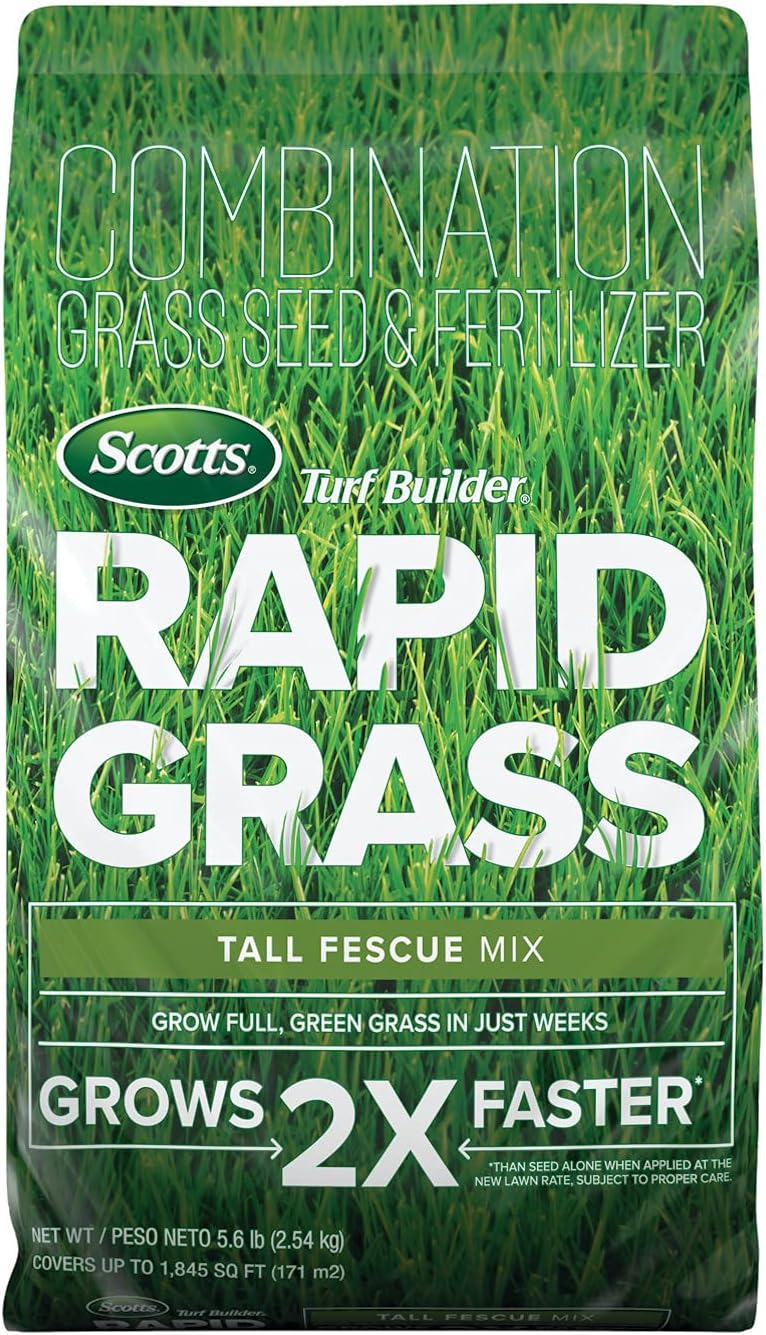
Scotts Turf Builder Rapid Grass Tall Fescue

This combo seed and fertilizer product delivers fast results if you need to fill in bare spots or start a new lawn quickly.
Pros
- Grass sprouts faster than regular seed because fertilizer is already mixed in
- Works well in shaded areas where other grass struggles to grow
- Thick, healthy grass comes in when you water it twice daily as directed
Cons
- Seeds need to be green colored to work properly, not yellow
- Takes about three weeks to germinate, which is longer than expected
- Costs more than buying plain grass seed
We spread this seed across some problem areas in our yard where the dog had torn up the grass. The bag covers 615 square feet for new lawns or up to 1,845 square feet when overseeding existing grass. That’s a decent amount of coverage for the price.
The fertilizer mixed into the seed helps grass grow faster than seed alone. We watered twice a day like the directions said and saw sprouts appear after about three weeks. The grass came in thick and looked healthy once it started growing.
One thing to check before you use this product is the seed color. We learned that green seeds work but yellow ones don’t germinate well. The shaded spots under our trees filled in nicely, which was surprising since those areas usually struggle.
You need to wait until you’ve mowed at least four times before using any weed control products. The Scotts Turf Builder Rapid Grass Tall Fescue works best when temperatures stay between 60 and 80 degrees, so spring or fall planting gives the best results. Keep up with regular watering and your patchy lawn will look much better in just a few weeks.
Scotts Kentucky 31 Grass Seed Mix
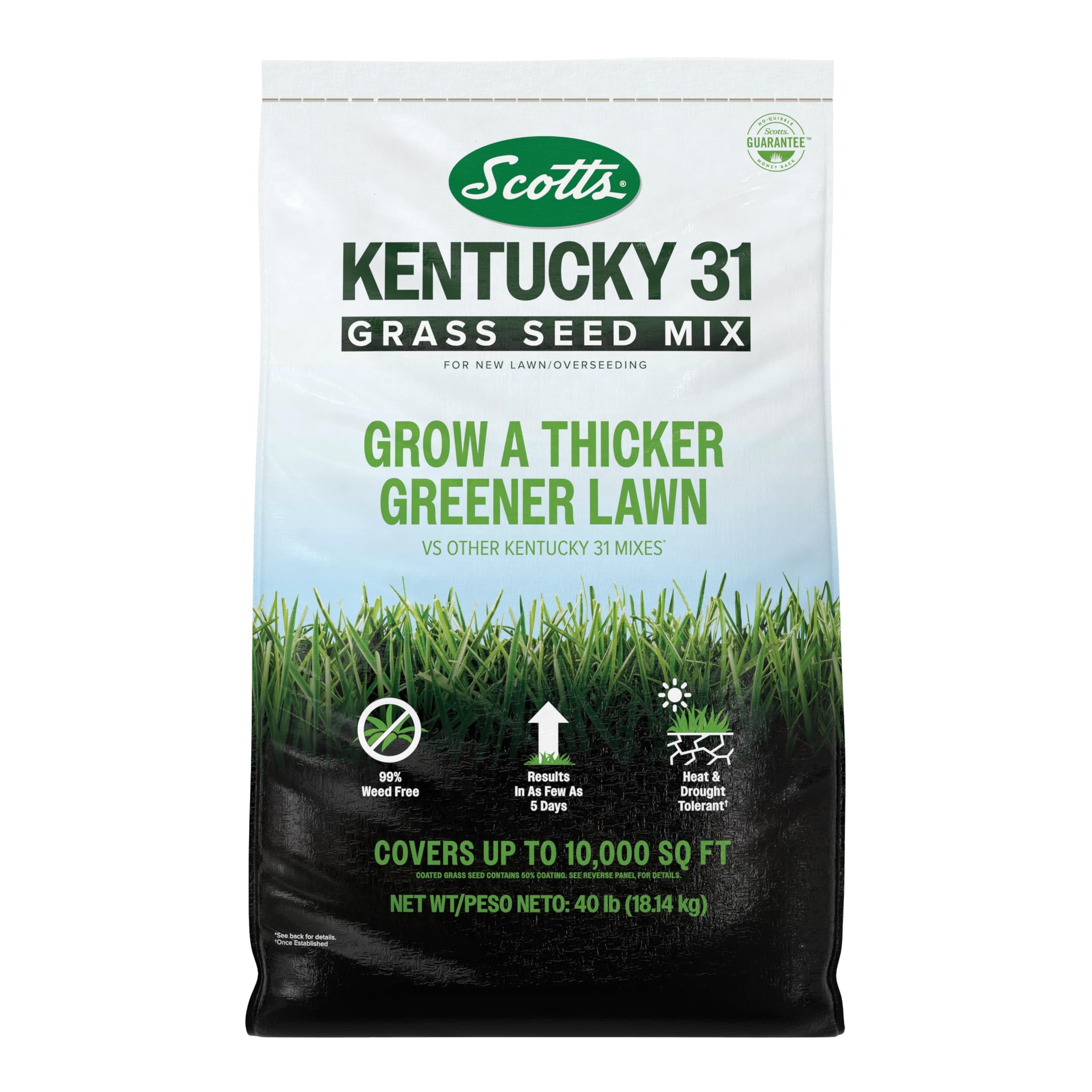
This seed mix delivers solid results for filling bare spots and starting new lawns without breaking the bank.
Pros
- Germination happens quickly with most seeds sprouting within the first week
- Works well in challenging conditions like heat and drought once the grass gets established
- One bag covers a large area whether you’re overseeding or planting from scratch
Cons
- Requires consistent watering for the first few weeks to get good results
- Birds will eat some of the seeds before they sprout if you don’t protect them
- Takes about three weeks for the grass to fully mature and fill in
We spread the Scotts Kentucky 31 Grass Seed Mix across several bare patches in our yard last month. The blend combines three types of grass that each bring something different to the table. The Kentucky 31 Tall Fescue keeps costs down and stands up to foot traffic. Premium Tall Fescue adds that deep green color we wanted. The Annual Ryegrass fills in gaps fast while the other grasses take hold.
Within five days, we noticed the first green shoots poking through the soil. By the end of the first week, about 90% of the seeds had germinated. We did lose some to birds before they could sprout, but it wasn’t enough to ruin the coverage.
The biggest challenge was keeping everything wet. We watered twice a day for the first two weeks to help the seeds germinate. After three weeks, the new grass was thick enough to mow and matched the rest of our lawn pretty well.
The 40-pound bag gave us plenty of seed to work with. We used it for overseeding and had enough left over for touch-ups. The coverage claims on the bag matched what we experienced in our yard.
Pennington Kentucky 31 Tall Fescue
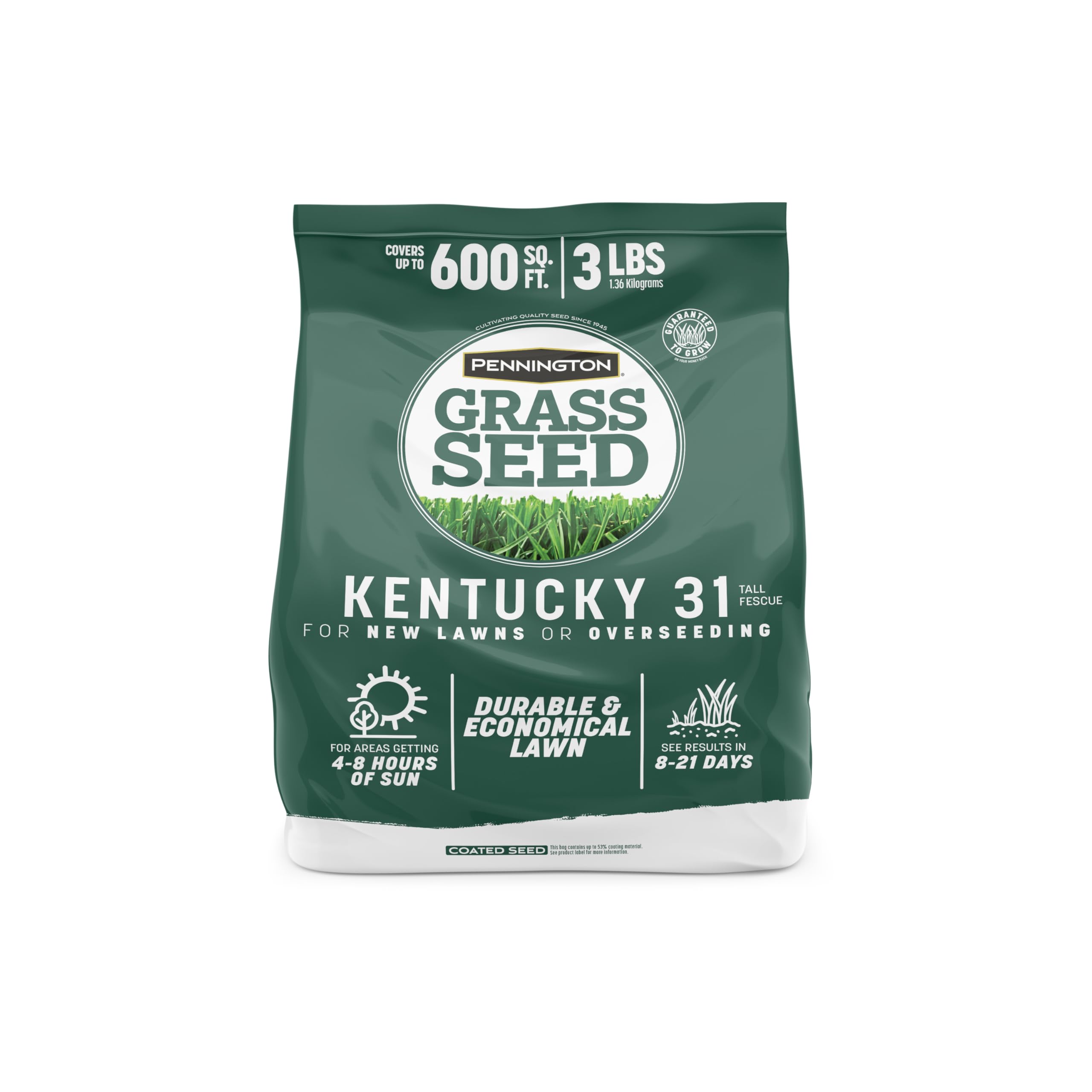
This grass seed works well if you need a tough, budget-friendly lawn that can handle heat and foot traffic without much fuss.
Pros
- Handles hot weather and drought better than many other cool-season grasses we’ve tried
- Covers a lot of ground without breaking the bank
- Grows quickly and holds up well when kids or pets run across it
Cons
- The lighter green color looks less lush than some premium varieties
- Needs proper soil coverage and protection from birds during germination
- Won’t give you that thick, dark green lawn if that’s what you’re after
We recently used this seed to fill in some bare spots where we’d pulled out stubborn weeds. The germination happened right around the two-week mark, which matched what Pennington promises. The grass came in thick enough to cover the problem areas without needing multiple applications.
The blades are noticeably thicker than the fine fescue varieties we’ve worked with before. This makes the lawn feel sturdier underfoot. We noticed it bounced back quickly after a dry spell, which saved us from constant watering during a hot summer stretch.
The lighter green shade might bother you if you want that country club look. It’s functional grass, not show grass. We mixed it with a bit of topsoil before spreading it, which helped with establishment. Birds did try to snack on some of the seeds, so covering it lightly made a real difference in how much actually sprouted.
Scotts EZ Seed Patch & Repair

We found this all-in-one solution works well for fixing bare spots quickly, though it requires consistent watering to get results.
Pros
- Works in both sunny and shady areas without needing different products
- The mulch expands and holds moisture around seeds to help them grow
- You can see the coverage clearly because the mulch changes color when wet
Cons
- Needs watering multiple times per day in the first two weeks
- Costs more per pound than buying separate seed and fertilizer
- Some areas may need a second application if the first attempt doesn’t fully take
We tested this product on several problem spots in our yard last spring. The mulch material turned dark brown right after watering, which made it easy to see where we had watered enough. Within about ten days, we noticed small grass shoots coming up through the brown coating.
The product handled our shaded areas better than regular grass seed we tried before. We had a spot under a tree where nothing would grow, and this mix finally filled it in after two applications. The slope near our driveway also stayed in place better than loose seed would have.
Watering proved to be the biggest challenge during the germination period. We had to water three times daily when temperatures climbed into the 70s. Missing even one watering session seemed to slow down the growth noticeably.
The 20-pound bag covered about 400 square feet in our yard, which matched what the package claimed. We applied it according to the instructions, making sure some bare ground still showed through. Going too heavy with the application wasted product and didn’t improve results.
After the grass reached three inches tall, we treated it like the rest of our lawn. The new grass blended in well with our existing turf. Some weeds did pop up in the second year, but regular mowing kept them under control.
Buying Guide
When we shop for grass seed, we need to consider several key factors to make the right choice. The type of grass that grows well in our area depends on our climate and how much sun our lawn gets.
Climate and Growing Conditions
We should first figure out if we live in a cool-season or warm-season region. Cool-season grasses grow best in northern areas, while warm-season varieties thrive in southern climates. Our lawn’s sun exposure matters too. Some grass types need full sun, while others tolerate shade better.
Seed Quality Factors
| Factor | What to Look For |
|---|---|
| Germination Rate | 85% or higher is good |
| Purity | Should be 90% or more |
| Weed Seed Content | Less than 1% |
| Crop Seed Content | Less than 5% |
We can find this information on the seed label. Higher germination rates mean more seeds will actually grow into grass.
Intended Use
We need to think about how we’ll use our lawn. High-traffic areas need durable grass that can handle lots of foot traffic. If we have kids or pets, we want tough varieties that recover quickly from wear.
Seed Blends vs. Single Varieties
Seed blends contain multiple grass types, which helps our lawn resist disease and adapt to different conditions. Single varieties work well when we have specific needs or very uniform growing conditions.
We should also check if the seed is coated. Coated seeds often include fertilizer or mulch that helps with germination.
Frequently Asked Questions
Grass seed selection raises common questions about density, brand reliability, regional performance, and timing. We’ve compiled answers to help you make informed decisions based on your specific lawn needs.
What type of grass seed creates the thickest, most dense lawn?
Turf-type tall fescue and perennial ryegrass varieties produce the densest lawns when properly maintained. These grasses naturally grow in tight bunches that spread to create thick coverage.
Kentucky bluegrass also creates dense lawns, but it takes longer to establish. It spreads through underground stems called rhizomes, which fill in bare spots over time. This process can take a full growing season or more to achieve maximum density.
For the absolute thickest coverage, we recommend seed blends that combine turf-type tall fescue with perennial ryegrass. The ryegrass establishes quickly while the tall fescue provides long-term thickness.
Which grass seed brands are considered the most reliable for consistent germination and coverage?
Jonathan Green, Scotts, and Pennington consistently deliver germination rates above 85 percent when seeds are stored and planted correctly. These brands test their seeds regularly and print germination percentages on their packaging.
We’ve found that Jonathan Green Black Beauty varieties perform particularly well for consistent coverage. Scotts Turf Builder blends also maintain reliable germination across different climate zones.
What is the best grass seed for overseeding an existing lawn in the Northeast?
Perennial ryegrass works best for overseeding Northeast lawns because it germinates in 5 to 10 days. This fast establishment helps it compete with existing grass without disrupting your current lawn.
A blend of perennial ryegrass and fine fescue also works well for shaded areas common in Northeast properties. The fine fescue handles shade better than most grass types while the ryegrass fills sunny spots.
We recommend avoiding Kentucky bluegrass for overseeding because it takes 14 to 21 days to germinate. Existing grass often outcompetes the slow-growing bluegrass seedlings.
Which grass seed varieties perform best in full sun and drought conditions?
Turf-type tall fescue handles full sun and drought better than any other cool-season grass. Its roots grow 2 to 3 feet deep, which lets it access water that other grasses can’t reach.
Buffalograss and blue grama work best in hot climates with intense sun exposure. These warm-season grasses need minimal water once established and actually prefer dry conditions.
Bermudagrass thrives in full sun and recovers quickly from drought stress. It goes dormant during dry periods and greens up rapidly when water returns.
Should I choose a single variety or a grass seed mix for my climate and soil conditions?
We recommend grass seed mixes for most home lawns because they provide natural insurance against disease and varying conditions. A mix with 3 to 4 varieties ensures that at least some of your grass will thrive regardless of weather changes or pest problems.
Single varieties work best for athletic fields or specialty applications where uniformity matters more than resilience. They create a consistent appearance and texture across the entire lawn.
Choose a mix that matches your specific conditions rather than a generic “sun and shade” blend. Look for mixes labeled for your exact situation, such as “dense shade” or “high traffic.”
Is October too late in the season to seed or overseed a lawn?
October works well for seeding in zones 6 and warmer, where soil temperatures stay above 50 degrees Fahrenheit. Grass seed needs 45 days of growing time before the first hard freeze to establish properly.
In zones 5 and colder, we don’t recommend seeding after mid-September. The grass won’t have enough time to develop roots before winter arrives.
Late October seeding often results in seed that sits dormant through winter and germinates in spring. This approach wastes seed because birds, rain, and snow wash away or eat much of it before germination occurs.
